Measure to Improve not Impress: NPS measures loyalty not satisfaction
In any business the stakeholders need to be defined and the product or service needs to be designed in the best possible manner. While this truth is self evident the board rooms and governance are busy assessing performance based on the profitability of the business. Top line, Bottom line, Revenue and Expenditure dominate the discourse. The three stakeholders in healthcare in no order of importance are care seekers (patients), treatment providers (doctors, nurses, paramedical) and support staff and other employees.
While these are extremely important a healthcare setup or any hospital while dealing with human life needs to create services which not only provide consistent clinical outcomes based on standard treatment guidelines and evidence based medicine, but while doing so exhibit compassionate care. While treating illness has always been considered as the primary function of a hospital, the concepts of hospitality, customer delight and marketing seem alien to medical practitioners.
In my journey as hospital administrator and clinician I have come to realize that the expectations of the stakeholders exceeds this expectation of just positive clinical out come. Quality healthcare at an affordable cost provided with empathy in a rational and ethical manner cannot come unless it is coupled with compassion and empathy. All quality programs are designed to create SOP’s processes and measures to improve the safety aspects of healthcare. While these are extremely important it is very clear that these are working to create a zero error standards of medical care. This is good for most industries but in service and hospitality industries it is the perceptions that matter. It is important to remember processes are delivered by teams and perceptions are created by individuals. If you merely follow processes you increase productivity and efficiency and reduce the costs. However the manner of providing healthcare using the acronym S.H.A.R.E. goes beyond processes to create real value.
Sense the need of your customer even before it is expressed which translates into showing initiative and ending any interaction with the question “Is there anything else I can do for you?” or in case of being in the midst of a sequence of events guiding the customer to the next step.
Help each other which translates into team work where the patient perceives and feels that all employees work together and for each other. The customer never gets the answer “this is not my department go to this person for help”. Even if there is a failure or service deficiency the individual works to salvage the situation and in doing so ensures that he internally compensates or covers for deficiency and does a damage control exercise.
Acknowledge the people and their state of mind by not just showing but feeling genuine empathy for every customer. This will stem naturally from the habit sensing peoples need and working like a team. Owning ones job and going beyond the routine happens when we empathize with all stakeholders.
Respect the people who you encounter, their privacy, rights and make them feel valued. Courtesy in all ones dealings is the hallmark of genuine respect.
Explain and communicate every single thing to your customer. The most important thing that happens is that in our effort to maximize efficiency and therefore profit we do not spend that extra to listen to our customer and patiently explain what is going to happen.
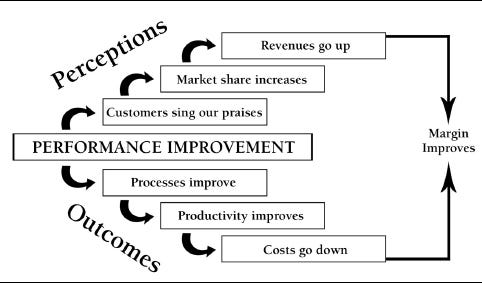
The concept of SHARE is so simple yet if not practiced we will see instances of dissatisfaction and often many of these remain unseen. For incidents reported, when we sit down to do the so called Root Cause Analysis with the background of processes and SOP’s we will only land up tinkering with the system and create reams of statistical reports which will impress the management but will not create any real improvement.
Any hospital service must be designed in such a manner that we constantly create double thank you moments in all interactions. A service provided to a patient must be provided with efficiency in a courteous manner, following standard treatment methods at an affordable price. The doctor should be provided the best possible working equipment and environment to deliver the service with adequate compensation and respect for his time and skill. The employee must also feel that he works in a hospital which genuinely works for the welfare of society.
Coming to the usual designs of feed backs we either use ratings Excellent, Good, Dissatisfied and Poor. To make things slightly better we add Average between Good and Dissatisfied. Feedback is elicited at the end the time of discharge and majority of the patients pay scarce attention to the form and hurriedly tick average scores. In an organization without the concept of S.H.A.R.E. an occasional good performer shines out and a customer may remember and give an excellent rating for a particular aspect of care. This is taken at the end on the day of the discharge, a day when bills have to be settled, instructions have to be understood, reports have to be collected and in this the suspense of cashless insurance and follow up adds to the turmoil. In organizations lacking in cohesion teamwork and motivated staff there is a good chance that filling this feedback is relegated to some random family member and majority of services will be ranked good and satisfactory as it may seem rude to say one is dissatisfied. Also, since all ended reasonably well despite glitches and absence of team work the feedback tells the management they are good but not great and a sense of complacency sets in. Even if there are not many excellent ratings if we get many good ratings everybody feels good and management is impressed. We are doing great and we can continue the same way.
The net promoter scale is designed to ask a fundamental broad question. The question is that on a scale of 0-10 what is the likelihood of you recommending the service of the hospital to other family members and friends? 0 and 1 means not at all or rarely and 9 and10 means most of the times or always. It is important that both the extremely satisfied and the extremely dissatisfied customer has a story to tell. So it is important to give space to the customer to write and relate that story. So an open question must be “What’s the primary reason for your score?” or “What could we do to improve your score?”. This granular measurement gives a nuanced scoring and is more likely to capture a true feedback. If the management analyses this feedback it can certainly learn lessons and improve. The next important step is to have a call back service. There are very rare organizations who take this seriously. Unless one analyses the descriptive feedbacks calls back to see the reasons for the feedback the organization will not improve. The feedback forms designed with such scales should be made available from the first day to enable the customer to rate all processes like security, admission, physician communication, care, billing etc.
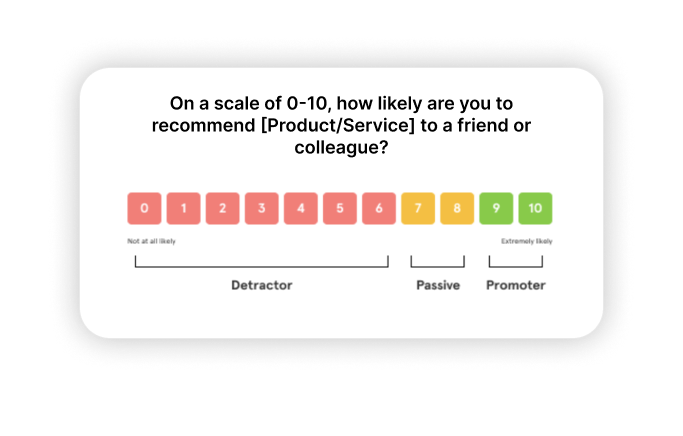
How valid is this parameter? It is said that only 16 % of persons rating the services from 0-6 may use the services again and that too because they did not have an alternative in the circumstances prevalent. But more than 96% of customers rating the services 9 and 10 came back to use your services and what more recommended our services to friends and colleagues. This way we are measuring loyalty and not satisfaction. We are measuring to improve and not impress. The ratings 7 and 8 signify neutrality. Everyone must try to convert the detractors to passive and promoters.
It is the dream of an organization to have every stakeholder to become a promoter ready to recommend the hospital to everyone in their circle of influence without the slightest hesitation.
Vispi H. Jokhi


Comments